UTMB Health Sports Medicine and Rehabilitation - League City Campus Clinics
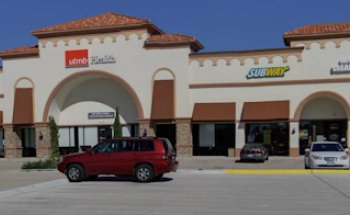
Información sobre UTMB Health Sports Medicine and Rehabilitation - League City Campus Clinics
77573, League City
Horario de apertura
- Lunes: 8:00 AM – 5:00 PM
- Martes: 8:00 AM – 5:00 PM
- Miércoles: 8:00 AM – 5:00 PM
- Jueves: 8:00 AM – 5:00 PM
- Viernes: 8:00 AM – 5:00 PM
- Sábado: Closed
- Domingo: Closed
The orthopedic specialists at UTMB Health offer care for sports injuries, tendon and ligament damage, joint dislocations, fractures, and strains and sprains.
Comprehensive evaluation of sports-related injuries along with a rehabilitation plan for professional athletes, weekend warriors and everyone in between.
Treatment includes rest, pain management medications, and avoidance of physical activities and high concentration-related activities such as reading, using a computer, or watching TV. See our sports medicine physicians specially trained in concussion care, Dr. Bhardwaj and Dr. Propst, for a prompt diagnosis and recovery treatment plan tailored to your symptoms, lifestyle, and goals.
The surface of our bones is covered in rubbery cartilage that allows smooth fluid motion in the knee joint without pain unless it becomes worn or damaged. A strong, direct blow to the knee joint is generally the cause of cartilage injury, particularly to participants of high impact sports such as football or wrestling. On the other hand, aging can cause cartilage to deteriorate completely and result in bone-to-bone contact leading to severe and debilitating pain.
Knee cartilage repair surgery generally removes frayed cartilage to smooth and contour the cartilage surface. The procedure eases pain due to less friction and ultimately, slows down further cartilage degeneration. Furthermore, a cartilage restoration procedure can use a variety of techniques, dependent on the injury, to rebuild the cartilage by either supplementing the existing cartilage with a cartilage graft or stimulating the bone to produce new cartilage. Both types of surgeries will require assistive devices post-operation, such as a brace or crutches, and physical therapy to restore strength and range of motion.
All post-op recovery treatment plan details will be discussed with your sports medicine surgeon prior to the operation so you know what to expect.
The meniscus is a C-shaped piece of cartilage in the knee that serves as a shock absorber. Injuries most often occur during sports caused by pivoting the upper leg when the foot is planted, and the knee is bent. Aging is also a cause for degenerative meniscus tears.
Non-surgical treatments include the RICE method (Rest, Ice, Compression, Elevation), anti-inflammatory medication, and injections. In the case that surgery is necessary, our UTMB providers specialize in meniscus repair, reconstruction, and transplantation. Each type of surgical procedure is dependent on the injury as well as various factors such as the patient's age, weight, stability of ligaments surrounding the meniscus, and previous surgery or injury.
The rotator cuff consists of tendons and four muscles (supraspinatus, infraspinatus, teres minor, and subscapularis) that are connected to hold your upper arm bone in your shoulder socket. A rotator cuff injury occurs when one of these tendons becomes partially or fully torn.
Shoulder separation generally occurs during a direct blow to the point of the shoulder or fall on the shoulder that either stretch or tear the ligaments connecting the shoulder blade to the clavicle.
With the assistance of pain medication, rest, applying ice to the injury, and physical therapy, a minor condition of shoulder separation may take a few weeks to a month to fully recover with the use of an assistive device such as a sling. Severe cases, however, may require surgery to repair ligaments and stabilize injured bones.
Shoulder dislocation occurs when the upper arm bone leaves the cup-shaped socket of the shoulder blade and can be constituted as a partial or full dislocation depending on the severity.
First time dislocation is usually treated with rest or physical therapy but may also require manipulation of the shoulder bones to return them back to their proper position. Manipulation of the shoulder bones, also known as a closed reduction, may require a muscle relaxer, sedative, or general anesthetic prior to this process depending on the severity of pain. The process would then be followed by immobilizing the shoulder for three days to a few weeks with the use of a sling or splint. If shoulder dislocation continues to occur, surgery can become necessary to stabilize the shoulder. Our surgeons are experienced with all types of shoulder stabilization ranging from minimally invasive arthroscopic repair to open surgeries such as the Latarjet procedure.
Strains and sprains are interchangeably used because of the common symptoms of the two conditions. For instance, a joint sprain is the overstretching or tearing of ligaments, which are the bands of tissue that connect bones in a joint, whereas a joint strain is the overstretching or tearing of tendons or muscles. Commonly affected areas of the body include the back, ankle, wrist, knee, and thumb.
Treatment options for mild strains and sprains may include anti-inflammatory medications, rest, applying ice on and off for 20 minutes during the first 24-48 hours, compression to reduce swelling, and elevating the affected area above the heart. More severe cases may require immobilization such as splint or cast. Severe cases may require surgery to repair torn ligaments and/or reattach muscles and tendons.
Traumatic sports injuries can happen suddenly or may result from lack of training, faulty use of protective devices, or insufficient warm-up exercises. From dislocated joints, bone fractures, or an injury to one or more of the four major ligaments in the knee (ACL, MCL, PCL, LCL), our orthopedic providers are fully equipped to provide a prompt evaluation to begin a treatment plan based on your recovery goals.
Treatment depends on the type of injury, affected area, and severity. If surgery is necessary, details of the procedure and post-operative treatment will be discussed with your sports medicine surgeon prior to the procedure so that you know what to expect.
If your provider considers you as a candidate for surgery, the UTMB staff will provide post-operative instructions and schedule your surgery at one of our campus locations. The type of surgical procedure will depend on your injury and discussed in detail between you and your physician. Outpatient vs. inpatient procedure, recovery time, physical therapy, post-operative medications, and more are all topics of discussion that will be addressed to create the recovery plan that best fits your needs and lifestyle.
If you feel like surgery isn’t for you at this time, non-surgical alternatives exist to help rehabilitate your injury, prevent further injury, and manage the pain with medication. For example, rest, exercises, medications, injections, or physical therapy are options to consider. UTMB offers a convenient outpatient pharmacy located at our League City, Clear Lake, and Galveston campuses where we can dispense medication for you. Furthermore, our League City, Clear Lake, and Galveston campuses feature physical therapy locations to help you regain strength and mobility in the affected area.
October 4, 2023 • 5:54 a.m.
From concussions to injuries that may require surgery, Dr. Stacy Leung covers what to do if your student athlete is injured playing or practicing their favorite sport.
UTMB Health Sports Medicine and Rehabilitation - League City Campus Clinics: Opiniones
Experiencia fantástica:
Experiencia fantástica: Very caring and helpful!
Deja tu opinión sobre UTMB Health Sports Medicine and Rehabilitation - League City Campus Clinics:
UTMB Health Sports Medicine and Rehabilitation - League City Campus Clinics aparece en los siguientes listados:
Otros centros de fisioterapia que podrían interesarte
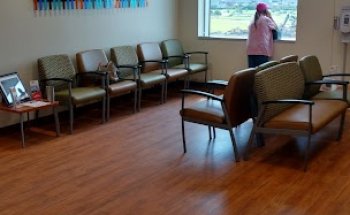
UTMB Physical Therapy
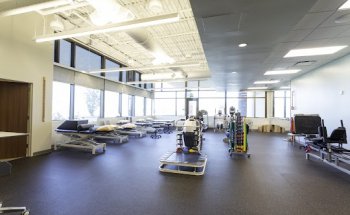
Memorial Hermann Sports Medicine & Rehabilitation at Convenient Care Center in League City
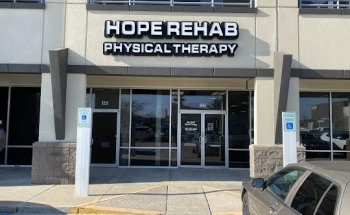
Hope Rehab Physical Therapy
Axis Sport & Spine
Physical Therapy - Houston Physicians' Hospital League City

St Johns Sport Medicine
Houston Methodist Orthopedics & Sports Medicine Physical Therapy - Dickinson
Americana Injury Clinic
Acupuncture for Neck Pain
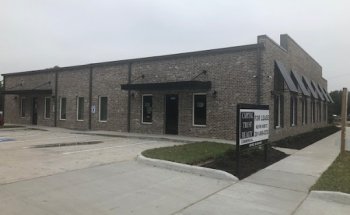
League City Spine and Sports Medicine formerly league city chiropractic & sports medicine
Añade tu centro de fisioterapia a nuestro directorio de forma gratuita
Si gestionas una clínica de fisio y quieres aparecer en nuestra guía, envíanos la información de tu empresa y podrás aparecer de forma totalmente gratuita.


 Austria
 Belgium
 Brazil
 Chile
Chile España
 France
 Germany
 Italy
Italy Netherlands
 Portugal
 Switzerland
 United States
 Uruguay